
Abraham on Watching and Private Nuisance
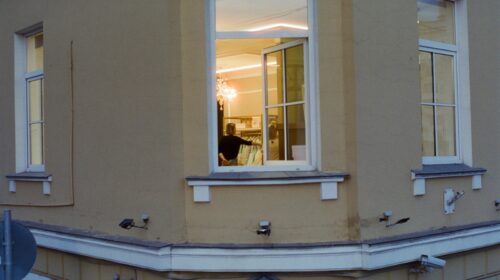
Haim Abraham has posted to SSRN Private Nuisance, Looking Out, and Gazing In. The abstract provides:
Can looking into a neighboring property through its windows, or conducting one’s affairs in their own property in a manner that is visible to neighbors, constitute private nuisance? In several cases, courts have answered this question affirmatively. In this Chapter, I critique these rulings through two prisms – a rights-based analysis and a queer theory lens – to articulate circumstances under which visual interferences ought to be considered as grounds for a private nuisance claim. I show that merely looking out from property could not constitute a wrong, as it is a basic feature of being a free and equal individual. Furthermore, incidentally looking into someone else’s property also could not constitute a wrong, as otherwise a society of free and equal individuals would not be possible. No one has a right to demand that others remain hidden from sight. Likewise, no one has a right to demand that others look away when in plain view. Any other conclusion would subject some to the arbitrary whims of others, based on a division of power that is similarly arbitrary.
I then demonstrate that in analyzing what visual interferences should be deemed as ‘reasonable’ in a given locality, courts implicitly rely on a hierarchy of types of land uses. Through an exploratory analysis of six cases of visual interferences, I identify that courts engage in this kind of hierarchical structuring, viewing privately owned homes as the ‘normal’ category of land uses against which all others are evaluated. Other activities are more likely to be deemed as ‘abnormal’ and will not be protected by, or from, private nuisance, resulting in a disproportionate negative impact on marginalized groups and on activities aimed for the public’s benefit.